
CRM Maintenance Services
SuvoCRM provides CRM maintenance services that keep your system healthy on a schedule. The plan covers platform updates, health checks, backups, data-hygiene routines, and permission reviews on leading platforms, including Salesforce, HubSpot, and Dynamics 365. Tell us which system you want kept in good shape.
What Are CRM Maintenance Services?
CRM maintenance services keep a working system technically healthy over time, so it stays fast, secure, and accurate between bigger projects. The work applies vendor updates on a schedule, runs regular health checks, takes backups, refreshes data hygiene, and reviews who holds access.
This is preventive upkeep on a calendar, not a rescue after the system has already broken. We catch the small problems early, before a stalled automation or a missed patch grows into something the whole team feels.
Most platforms drift the moment nobody is minding them. A steady maintenance rhythm keeps your configuration matched to how the business really runs, month after month.
Our CRM Maintenance Services
CRM Update Services
Patch cycles and version releases get applied on a planned schedule, so your CRM never falls behind on vendor fixes. We test each release in a sandbox, then confirm each CRM configuration change holds up against your live records before sign-off.
CRM Health Check Services
Recurring health checks watch load times, storage limits, error logs, and automation queues before any of them stall the team. Each pass yields a short written report, and anything deeper, like a CRM optimization need, is flagged with a next step.
CRM Backup Services
Scheduled exports and periodic restore tests keep a recoverable copy of each record stored safely off the platform. We confirm the backup file opens and pair it with our CRM recovery path so a clean copy is always on hand if you ever need it.
CRM Security Review Services
Two-factor coverage, audit logging, and login policies get reviewed on a fixed cadence to keep security tight as threats shift. Dormant accounts are flagged and shut down each cycle, in addition to the broader CRM administration work we run.
CRM Data Hygiene Services
Routine dedupe sweeps, validation rules, and stale-record archiving run on a calendar, so the database does not degrade in the slow months between bigger projects. A backlog too large for a sweep hands off to a dedicated CRM data cleansing pass.
CRM User Role Audit Services
Joiners get provisioned the right role map and sharing rules at once, while leavers are fully deprovisioned from our CRM setup work the day they go. Each internal move or promotion updates a profile, so access always tracks the live headcount.
CRM Maintenance Tailored to Your Industry
A maintenance schedule looks different for a hospital than for a retailer. Healthcare and finance teams lean on us for tighter access reviews and audit-ready records, while construction and manufacturing clients want uptime through busy seasons. We shape each upkeep plan around the rules and rhythm your sector runs on.
Common CRM Maintenance Gaps We Solve
Updates Pile Up Unapplied
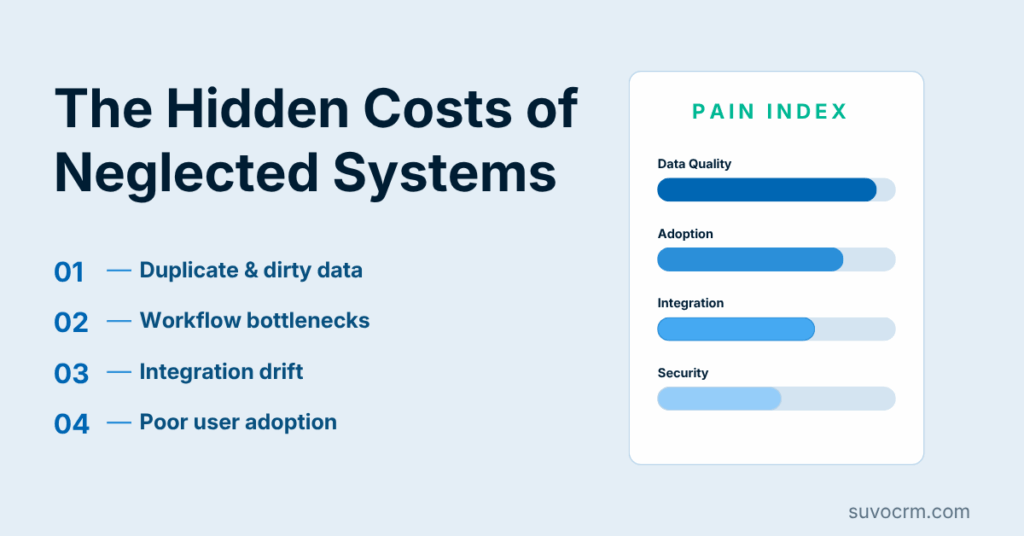
Vendor patches and version updates land most weeks, and an unattended CRM slowly stacks them up unnoticed. By the point anyone reacts, the platform sits several releases behind, and a single forced upgrade breaks half the customizations at once.
Config Drifts Out of Line
Each quick edit a rep or admin makes leaves a small trace behind, and those traces add up faster than expected. Without a regular review, picklists, automations, and page layouts drift out of line until the CRM no longer matches how the team really works.
No Backup Until It Is Needed
Most teams assume the vendor holds a usable copy, then learn the hard way that a bad import or a mass delete is theirs alone to undo. With no recent export of their own on hand, the lost records simply stay lost once something finally goes wrong.
Stale Access Nobody Revisits
People join, switch roles, and leave, yet their CRM permissions hardly ever follow them out. Old logins stay active, and access creeps wider each quarter, so sensitive deal and customer records sit exposed to far more accounts than anyone approved.
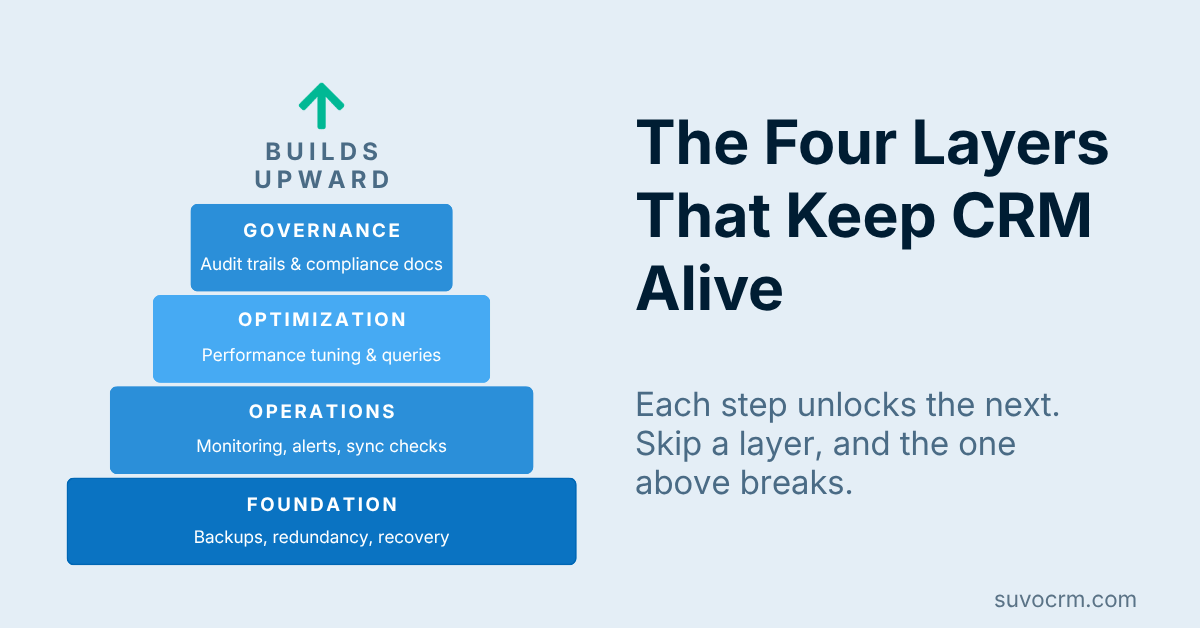
Scheduled Patch Testing
Each vendor release gets applied in a sandbox copy first, where we run your key workflows and reports against it. Only after it clears that pass does the update reach production, so a routine platform patch does not silently take a working feature down.
Automated Health Monitoring
Storage thresholds, API limits, error logs, and failed jobs get watched on a recurring schedule rather than checked once a year. Alerts surface a creeping problem early, while it is still a small fix and not yet a full outage that stops the team.
Backup and Restore Drills
A fresh export runs on a set interval and is stored off the platform, then a restore is tested so the file is known to open. Recovery is rehearsed long before it is ever urgent, which turns a frightening data loss into a calm, routine rollback.
Permission and Security Review
User roles, field access, sharing rules, and login settings get audited on a fixed cycle. Dormant accounts are closed, over-broad rights are trimmed back, and two-factor coverage is confirmed, so the CRM tightens up year over year instead of loosening.
Key CRM Upkeep Routines We Run on a Schedule
Why Choose SuvoCRM for CRM Maintenance
Years of Upkeep Across Many Systems
Our team has kept CRMs healthy through hundreds of update cycles, role changes, and quiet config drift, so trouble gets caught long before it stalls the business.
Disciplined, Scheduled Upkeep
Our 30 CRM specialists treat preventive maintenance as planned work with a calendar, so your system gets steady attention rather than the occasional panicked fix.
Loyal to Your System, No Vendor
No platform vendor holds a stake in our agency, so a maintenance recommendation reflects what keeps your CRM stable, never a partner quota or a pushed product.
We Hold Data Ready for AI
Because we pair CRM maintenance with AI work, each maintenance routine and permission check leaves your records clean and well-structured.
How Much Do CRM Maintenance Services Cost?
Maintenance is priced as a recurring plan, not a one-off bill, because the value is in the steady rhythm. Most clients sit on a monthly retainer between 800 and 2,500 dollars, set by how large the CRM is, how many users it carries, and how often updates and reviews need to run.
A lighter plan suits a single team on one platform with a quarterly review. A heavier plan fits a larger setup that wants monthly health checks, frequent backups, and tighter security audits across several connected tools.
Each plan lists exactly which routines run and how often, so the fee covers a known schedule of work. Reach out with your platform and user count, and we will size a plan that fits.
How Our CRM Maintenance Process Works
Step 1: Baseline
We document your setup, list the customizations that matter, and record where the CRM shows strain, so every later check has a starting point.
Step 2: Schedule
We set the calendar for updates, backups, health checks, and reviews, then agree on which tasks run weekly, monthly, and quarterly for your system.
Step 3: Maintain
Each routine runs on its date, with patches tested, backups verified, and access checked, while you receive a short report of what was done.
Step 4: Adjust
As your team and tools change, we revisit the plan, retire checks that no longer apply, and add new ones, so the upkeep still fits how you work.
What Is the ROI of CRM Maintenance?
The payoff from maintenance is the trouble that never arrives. A patch tested before release, a permission tightened on time, or a stalled automation caught early all spare you a costly scramble later.
Across our projects, regular upkeep catches most config and access problems while they are still small, before a single user files a complaint. Unplanned CRM downtime on a maintained system tends to fall by 30 to 40 percent within the first two quarters of a plan.
The quiet win is steadiness. A system kept current and clean stops sliding into the slow decay that forces an expensive rebuild a few years on. Get in touch and we will estimate the upkeep your CRM needs.
What Our Clients Achieve
A CRM That Stays Current on Updates
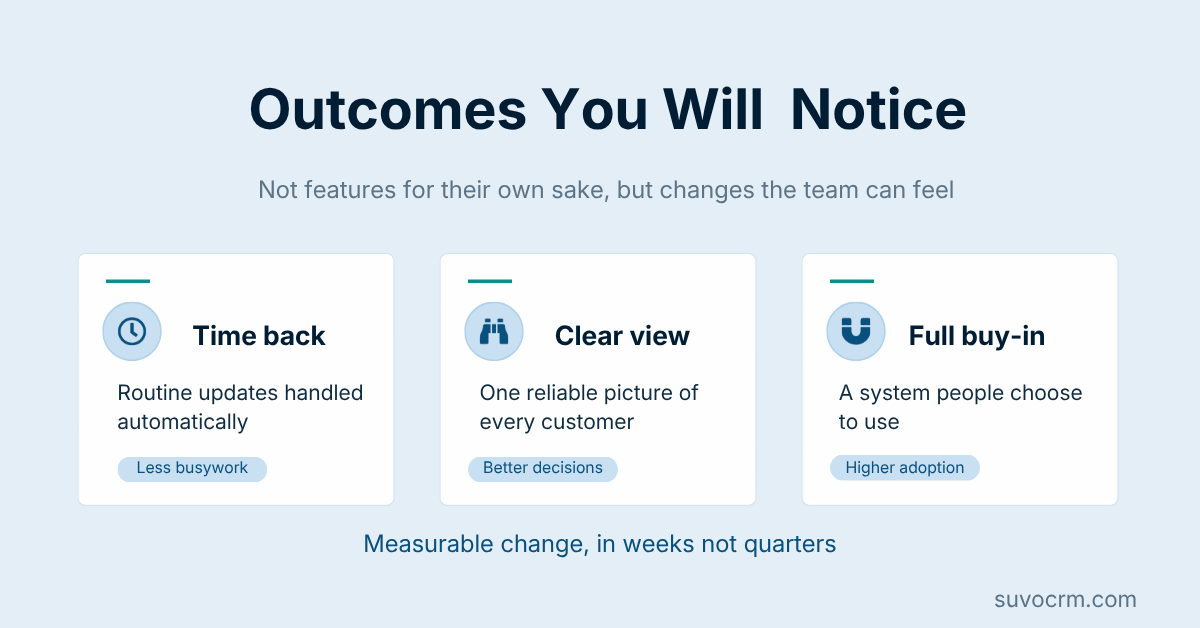
Each vendor patch lands on schedule, so the platform never falls a dozen releases behind.
Fewer Surprises That Stop the Team
Small faults get caught on a routine check, long before they grow into a workday outage.
A Recent Backup Always on Hand
A verified export sits ready, so a bad import or a mass delete becomes a quick rollback.
Records That Stay Clean Between Projects
Scheduled sweeps stop duplicates and stale entries from piling back up after a cleanup.
Access That Matches Who Is Here Now
Logins and sharing rules track real roles, so leavers are out and joiners are set fast.
A System That Ages Without Decaying
Steady upkeep keeps the CRM steady for years, sparing the team a forced rebuild later on.
How to Get Started with CRM Maintenance
You don’t need a tidy checklist before reaching out. If your CRM feels neglected, or you simply want it watched so it stops slipping, that is enough to begin.
Drop your platform, rough user count, and whatever worries you most about the system’s health in the contact field below. We will review the current state, flag what needs attention first, and propose a maintenance schedule that matches your size and budget.
From there, the routine work is ours to carry. Your team gets a CRM that stays healthy in the background and a short report each cycle showing exactly what was done.